A 3D pen draws in a line of plastic about 0.7 mm wide — a hot pen's bead. That single measurement decides most of the craft: every stencil lane, every color boundary, every stiffening line is counted in beads. The first-piece guide carries the app's lesson vocabulary word for word; here is the same vocabulary with the reasons attached.

Bead, lane, infill
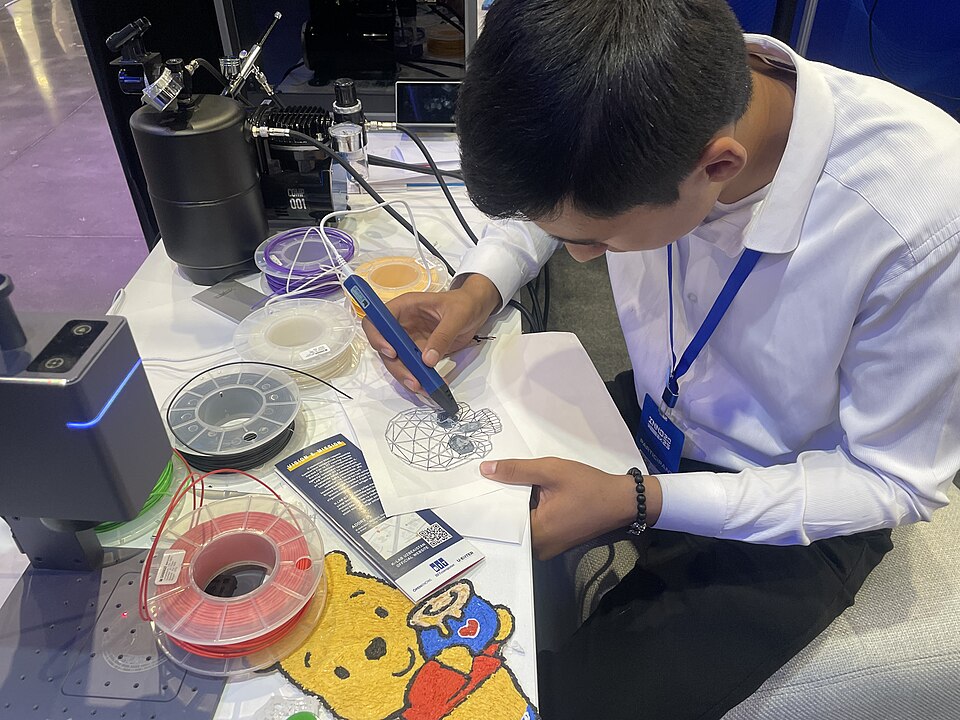
The bead is the line of plastic itself. The lane is the band one bead wide that runs just inside each color's edge — the pen tip travels down the lane's middle, so neighboring colors butt together along a clean boundary with no gap and no overlap. Where a color needs body, infill carries the load: a triangle truss, honeycomb, or crosshatch pattern inside the color's shape — the structure stands up and the plastic stays in reserve. Those three terms do most of the work of the craft.
Tack-downs, anchors, and the numbered seams
Two small habits keep a piece flat and keep it on the mat. The tack-down dot sits where infill lines meet, pinning the piece against curling as it cools. The anchor point is a small blob at the start of a line, so the line holds from its first millimeter instead of skating. For anything dimensional — the low-poly models the app's lessons build — drawings are panels: one flat face traced on its own, and where two panels meet, both carry the same number along the shared edge. The pen welds seam to seam; the numbers are how you check the pair before welding. The app counts strand lengths per color for a build, so the pen feeds a whole line without a mid-line splice — the guide's bench sheet prints that count.
It's beading, by another verb: elements laid along lanes, boundaries met cleanly, a pattern decided before the work starts. The tools changed; the discipline didn't. Trace a lane, butt the next color, pin the cool-down, and the piece lifts flat when it's cold.
Lay a bead this week. — the bench crew